500 Faux Embroidery Patchwork Bundle Review
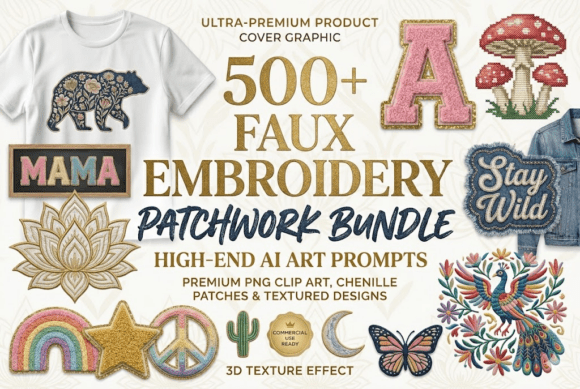
As a professional embroidery designer who has spent years turning flat digital concepts into tangible, stitched realities for small businesses, I approach every new tool with a mix of skepticism and excitement. When I first encountered the 500 Faux Embroidery Patchwork Bundle, my initial reaction was curiosity. In an industry where texture is everything, the promise of transforming designs with the ultimate 3D Texture Experience felt like a potential game-changer for those of us creating branded merchandise. This bundle, categorized under Illustrations and Graphics, offers 500 high-end AI prompts designed to create realistic, high-resolution Faux Embroidery and Chenille Patch graphics. But does it translate from a digital screen to the physical world of uniforms, caps, and tote bags? Let's dive into a real-world review focused on business application.
First Impressions: A Premium Look for Small Business Merch
The moment you open the 500 Faux Embroidery Patchwork Bundle, the visual impact is undeniable. The designs do not feel cheap or overly decorative; instead, they exude a sense of premium craftsmanship. For boutique owners, handmade brands, and Etsy sellers, this is crucial. The collection feels both modern and classic, offering a rustic yet polished aesthetic that can elevate a simple logo into a statement piece. Whether you are looking for something bold for a streetwear brand or elegant for a high-end florist, the variety within these 500 prompts ensures there is a style that fits your specific brand identity.
Unlike standard vector graphics that often look flat until stitched, these faux embroidery designs simulate the depth of thread and fabric right out of the gate. This makes them incredibly effective for creating printable mockups before you ever cut a single thread. For a local café or a creative studio, being able to show a client exactly how their apron embroidery or cap design will look in terms of texture and shadow builds immediate trust and professionalism.
Real-World Application: From Patches to Product Labels
The true test of any design asset is its versatility in commercial embroidery projects. The 500 Faux Embroidery Patchwork Bundle shines when applied to various forms of custom apparel and merchandise. Imagine a bakery needing distinct branding for their staff. Using these graphics, you can create a chest logo accent that looks like a high-density embroidered patch without the complexity of programming thousands of stitches manually. The simulated chenille textures are particularly striking for sports teams or school clubs looking for that raised, fuzzy look on varsity jackets.
For the maker economy, these assets are gold. If you run a shop selling tote bags, applying a faux embroidery design as a printed element can mimic the look of a custom embroidered patch at a fraction of the cost. It allows for rapid prototyping of product packaging accents or event merch. Even for a pet brand, these designs work beautifully as sleeve details or collar tags, adding a tactile feel to the customer experience. The ability to generate realistic visuals means you can sell the "handmade" vibe of a finished product even if the final production method varies.
Strategic Placement and Design Limitations
While the 500 Faux Embroidery Patchwork Bundle is powerful, an experienced designer knows that context is king. There are specific scenarios where these designs must be used carefully. First, consider small patch sizes. While the resolution is high, intricate details in the faux stitching might get lost if the design is scaled down too much for a tiny button or a narrow cuff. Always check if the design works at a small scale before committing to a full production run.
Cap embroidery presents another challenge. The curved surface of a baseball cap front can distort the perspective of a complex 3D graphic. If the design relies heavily on fine lines to suggest thread movement, ensure the contrast remains visible when wrapped around a curve. Similarly, dark uniforms require careful attention to thread colors. A design that pops on a white shirt might disappear on navy blue unless you adjust the underlying base or use a bright backing color in your mockup.
Furthermore, items that need frequent washing, such as kitchen aprons or gym gear, demand durability. While these are digital files, if you are using them to guide actual machine embroidery, remember that high stitch density areas—common in realistic faux embroidery—can make fabric stiff. This stiffness can lead to cracking or discomfort over time. Always advise clients on the trade-off between visual realism and fabric flexibility.
Impact on Brand Identity and Customer Trust
In the competitive landscape of small business merch, visual consistency is non-negotiable. The 500 Faux Embroidery Patchwork Bundle helps establish a cohesive look across different product lines. When a customer sees the same textured, high-quality aesthetic on a tote bag, a staff uniform, and a product label, it reinforces the perception of a well-curated brand. This visual consistency directly impacts buyer engagement and product value. A logo that looks like it was meticulously stitched by hand suggests care and quality, which translates to higher customer trust.
For digital embroidery file buyers and crafters, these assets bridge the gap between digital artistry and physical goods. They allow you to present a professional image without the steep learning curve of advanced digitizing software. By leveraging these design assets, you can offer a more sophisticated presentation of your brand, making your handmade products stand out in crowded marketplaces like Etsy or local craft fairs.
Practical Designer Notes for Production
If you decide to integrate the 500 Faux Embroidery Patchwork Bundle into your workflow, follow these practical steps to ensure success:
- Test in Black and White First: Before diving into color, strip the design down to grayscale. This helps you see if the contrast and structure hold up without the distraction of vibrant hues.
- Check Scalability: Verify that the design maintains its integrity at the intended patch size. Tiny lettering or minute stitch details may need simplification.
- Review Thread Color Contrast: Ensure the simulated thread colors provide enough separation against the fabric background you plan to use.
- Inspect Spacing and Hoop Size: If converting these to actual machine embroidery designs, confirm that the spacing allows for proper needle movement and that the total area fits within your standard hoop size.
- Test on Real Fabric: Never rely solely on a screen. Print a sample or stitch a test swatch to see how the texture interacts with the actual fabric texture.
- Use Proper Stabilizer: High-density designs require robust stabilization to prevent puckering. Choose a stabilizer that matches the weight of your garment.
- Create a Mockup for Client Approval: Use the high-resolution nature of these graphics to build a realistic printable mockup for client sign-off before cutting any fabric.
- Compare Assets: Place the design beside other elements of your brand kit to ensure it doesn't clash stylistically.
- Confirm Commercial Licensing: Before using any file for business purposes, double-check the license terms included with the bundle to ensure you have the rights for commercial embroidery and merchandise production.
The 500 Faux Embroidery Patchwork Bundle is more than just a collection of images; it is a strategic tool for elevating small business branding. By understanding its strengths and limitations, you can leverage these graphics to create stunning, professional merchandise that resonates with customers and stands the test of time.