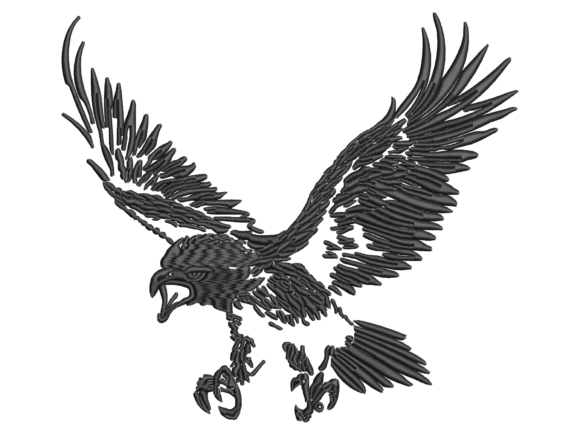
Attacking Eagle Embroidery Design Review
As a professional embroidery designer who has spent years translating digital concepts into tangible threads for small business owners, I approach every new machine embroidery design with a critical eye. The goal is never just to create something that looks good on a screen; the objective is to deliver a finished product that elevates brand identity and withstands the rigors of daily wear. Today, I am reviewing the Attacking Eagle Embroidery file. This design falls under the Birds category within the broader Embroidery type, but its potential extends far beyond simple decoration. For entrepreneurs creating small business merch, this piece offers a bold statement, provided it is executed with precision.
First Impressions: Boldness Meets Professionalism
When I first loaded the Attacking Eagle Embroidery file into my digitizing software, the visual impact was immediate. The title suggests aggression and power, which translates visually into sharp angles, dynamic lines, and a sense of forward motion. Unlike softer, decorative bird motifs often found in home decor, this design feels industrial and commanding. It exudes a premium, rugged aesthetic that aligns perfectly with brands wanting to project strength, protection, or high energy.
For a boutique or handmade shop, this design moves away from the "whimsical" and leans into the "iconic." It feels like a logo rather than a picture. In the context of brand identity, an eagle in an attacking posture can symbolize vigilance and excellence. However, because the imagery is so intense, it requires careful placement. It is not a background filler; it is a focal point designed to grab attention immediately.
Evaluating Real-World Business Applications
The true test of any digital embroidery file is how it performs when stitched onto actual merchandise. Here is how I envision the Attacking Eagle Embroidery functioning across various commercial applications:
- Staff Uniforms and Aprons: For a café, bakery, or creative studio, placing this design on the chest pocket of a work shirt or the bib of an apron creates a striking uniform look. It instantly differentiates staff from customers and adds a layer of professionalism to the team's appearance. The bold nature of the eagle ensures visibility even from a distance.
- Cap Embroidery: Caps are a staple for custom apparel. The Attacking Eagle works exceptionally well as a front-of-cap design. Its compact yet detailed nature allows it to fit standard 3-inch hoop areas without losing definition. This makes it ideal for branded giveaways, event merch, or everyday wear for employees.
- Embroidered Patches: One of the most versatile uses for this file is creating custom patches. You can stitch the design onto felt or twill backing, trim it, and apply it to denim jackets, tote bags, or backpacks. This allows for a modular branding strategy where customers can personalize their items.
- Tote Bag Design: A large-scale version of the Attacking Eagle Embroidery on a canvas tote bag serves as a walking billboard. The contrast of thread against natural canvas highlights the intricate details of the wings and beak, making it a desirable item for eco-conscious brands.
- Product Packaging Accents: While less common, stitching this design onto fabric tags or small cloth labels attached to packaging can elevate a handmade product line. It signals quality and attention to detail, enhancing the perceived value of the goods inside.
Critical Considerations for Production
While the Attacking Eagle Embroidery is visually stunning, experienced designers know that not all designs translate seamlessly to every fabric or size. There are specific scenarios where caution is required to ensure the integrity of the commercial embroidery project.
Size and Detail Constraints
This design features dynamic movement, which means it relies on clear outlines and distinct shapes. If you attempt to shrink this embroidery file too much for a tiny patch or a buttonhole accent, the details may merge. The "attacking" pose involves complex wing structures; at very small sizes, these could become indistinguishable blobs of thread. Always check the minimum recommended size before committing to production.
Fabric Texture and Stabilizer Needs
Because the design likely utilizes varying stitch density to create depth, it demands proper stabilization. On textured fabrics like fleece, heavy denim, or knit uniforms, the eagle's sharp lines might distort if the correct stabilizer is not used. I recommend testing the design on a scrap piece of the actual fabric first. Using a tear-away or cut-away stabilizer depending on the material weight is crucial to prevent puckering, especially around the dense areas of the wings.
Color Contrast and Visibility
The power of this design lies in its silhouette. When selecting thread colors, ensure there is high contrast between the design and the garment. An Attacking Eagle on a dark navy cap with black thread will fail to communicate the intended message. Lighter thread colors or metallic accents can make the design pop, ensuring it remains visible and impactful.
Impact on Brand Identity and Customer Trust
Choosing the right design assets is a strategic decision. The Attacking Eagle Embroidery does more than decorate; it communicates values. For a security firm, a construction company, or a sports brand, this motif reinforces themes of strength and action. For a local business, using such a high-quality machine embroidery design signals to customers that the brand cares about quality. A poorly stitched, pixelated logo damages trust, whereas a crisp, professionally embroidered eagle builds confidence.
Furthermore, consistency is key. If you use this design on caps, aprons, and tote bags, it creates a cohesive visual language. Customers begin to recognize the eagle as a symbol of your brand, similar to how they recognize the Nike swoosh or the Apple logo. This visual consistency drives buyer engagement and fosters a sense of community among those wearing your merchandise.
Practical Designer Notes for Buyers
If you are considering purchasing the Attacking Eagle Embroidery for your business, here is my checklist for success:
- Verify File Formats: Remember that Digital embroidery files are delivered in ZIP or RAR format. Ensure your machine supports the included formats (such as .PES, .DST, .JEF) before buying. This is a digital product, so no physical item will be shipped.
- Instant Download Reality: Be aware that this is an instant download after purchase. Once downloaded, No returns or refunds for digital products typically apply. Read the license terms carefully to confirm you have the rights for commercial embroidery use.
- Test Stitch First: Never skip the test run. Stitch the design in black and white on a neutral fabric to check for spacing issues, jump stitches, and overall balance.
- Check Hoop Size: Confirm the dimensions of the design against your available hoop size. If the design exceeds your hoop, you may need to re-digitize or adjust the layout.
- Create a Mockup: Before mass production, generate a printable mockup showing the design on your specific apparel. This helps in client approval and ensures the scale is appropriate for the final application.
- Review Thread Counts: Inspect the stitch density settings. High-density areas may require slower machine speeds to prevent thread breakage.
Final Verdict for Small Business Owners
The Attacking Eagle Embroidery is a powerful asset for any brand looking to make a statement. It bridges the gap between artistic expression and functional branding. Whether you are an Etsy seller adding a unique touch to your handmade products, a cafe owner outfitting your baristas, or a merch creator launching a new line of caps, this design offers versatility and impact.
However, its success depends on your execution. By respecting the technical requirements of embroidery—from stabilizer choice to color selection—you can transform this digital file into a physical emblem of quality. Do not rush the process. Test, refine, and then deploy. When done correctly, the Attacking Eagle becomes more than just a picture; it becomes a recognizable part of your brand story, stitched into the fabric of your business.